💹 FinTech
Trade Journal Pro
Trade Journal Pro
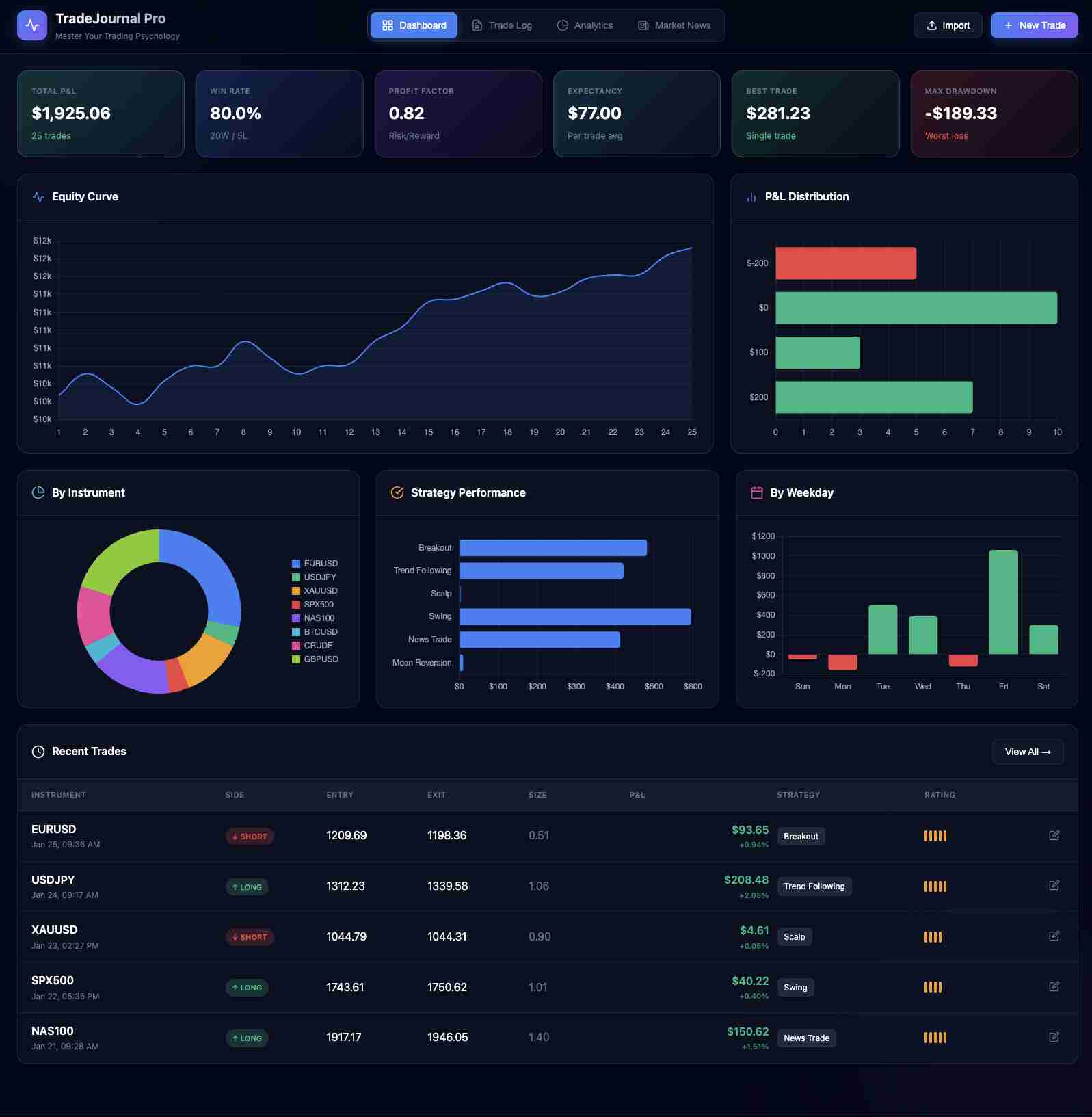
You have here the TradeJournal Pro in self-contained HTML format that you can open directly in any browser.
Features included:
📊 Dashboard
6 metric cards: Total P&L, Win Rate, Profit Factor, Expectancy, Best Trade, Max Drawdown
Interactive equity curve
P&L distribution by range
Charts by instrument, strategy, and day of the week
📁 Import
Drag & drop of files
Supports: CSV, XML (MS Office 2007+), XLSX, XLS, ODS (LibreOffice/OpenOffice)
📝 Trade Log
Entry Strategy: Document your entry strategy
Exit Analysis: Analyze why you closed your trade
Planned vs. Actual Outcome: The key point — record what you expected vs. what actually happened
Filters by instrument, strategy, and results
Star rating system
📈 Analytics
Monthly performance
Win Rate trend
Risk metrics: Sharpe, Sortino, Recovery Factor
📰 Market News
DXY Index with mini-chart
Current Fed Funds Rate
M2 Money Supply (liquidity)
News categorized by impact
Direct links to FRED, Federal Reserve, BEA
Gratis
💹
The Financial Digital
I created The Financial Digital, a web app with the authentic style of a classic financial newspaper. Main features:
Editorial Design:
Distinctive salmon-colored background (like the Financial Times)
Playfair Display typography for headlines and Libre Baskerville for body text
Subtle paper texture for a realistic effect
Decorative ornaments and separators in the style of traditional newspapers
Structure by Sections:
📈 Markets
🏛️ Economy
🏢 Companies
₿ Cryptocurrencies
🛢️ Commodities
Features:
Real-time market ticker in the header
"Breaking News" banner for featured news
Refresh button with loading animation
Date and time of compilation
Articles in different sizes (featured, large, medium)
Links to original sources
Responsive mobile design
Gratis
The Metals Triangle
The copper – silver – gold triangle in modern electronics
This work analyzes the use of copper, silver and gold as conductive materials from a physical, economic and systemic perspective, moving away from the simplistic comparison based solely on conductivity or price per gram.
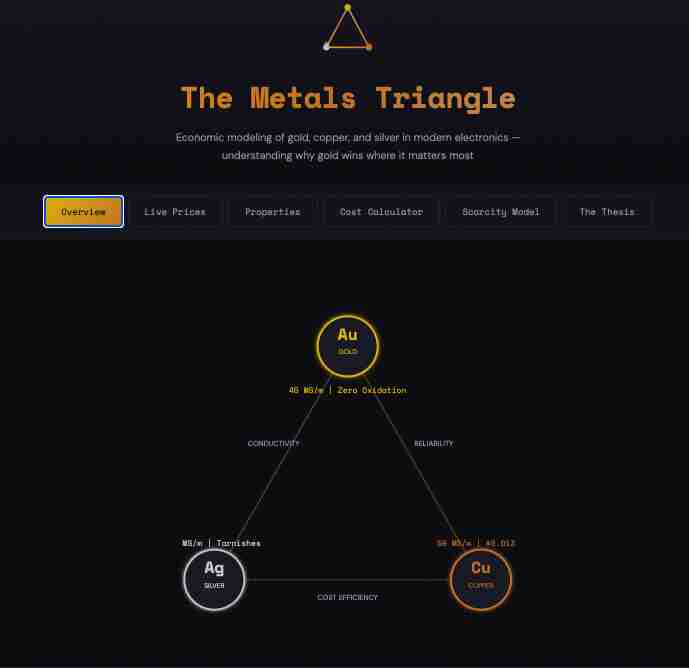
The study proposes that these three metals form a functional triangle in modern electronics:
Copper represents the structural material of the technological system: abundant, cheap and sufficiently conductive for the mass transport of energy and signal.
Silver occupies an intermediate position, offering maximum electrical conductivity at the cost of lower chemical stability, making it suitable for controlled and high-frequency applications.
Gold acts as a reliability material, not because of its conductive superiority, but because of its chemical inertness, eliminating failure modes associated with corrosion and contact degradation.
The core of the analysis demonstrates that material selection in critical systems should not be evaluated by the cost of the metal, but by the total expected cost, defined as the sum of the material cost and the economic risk associated with system failure. Under this framework, gold is economically rational in applications where the cost of failure far exceeds the cost of plating.
Finally, the work explores scenarios of copper shortage, concluding that said shortage does not lead to a volumetric substitution for gold, but rather to an intensification of the use of gold in critical points, while reinforcing aluminum substitution, miniaturization and recycling strategies. Silver is consolidated as a compromise between performance and stability.
Overall, the study suggests that the future of electronics is not defined by the amount of metal used, but by the functional value per atom, where each metal plays a specific and irreplaceable role within the global technological system.
Gratis
Candle Size Measure
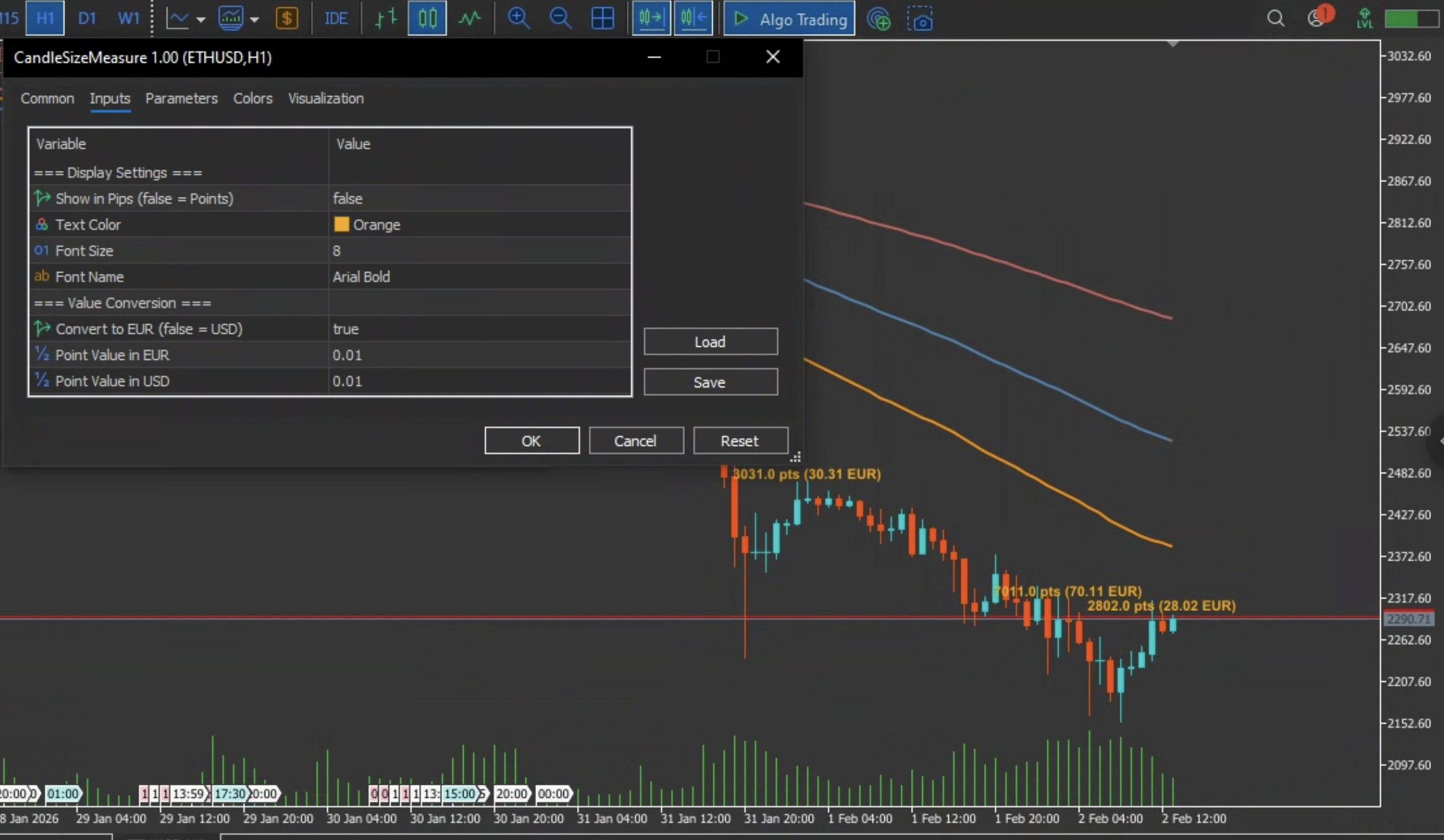
I have created an interactive indicator for MT5 with the following features:
Main Functionality:
Click on a candle → Displays the size in points/pips above the candle
Click again on the same candle → Deletes the measurement
Multiple measurements → You can keep the measurements of several candles active simultaneously
Conversion panel → Automatically calculates the monetary value
Gratis